
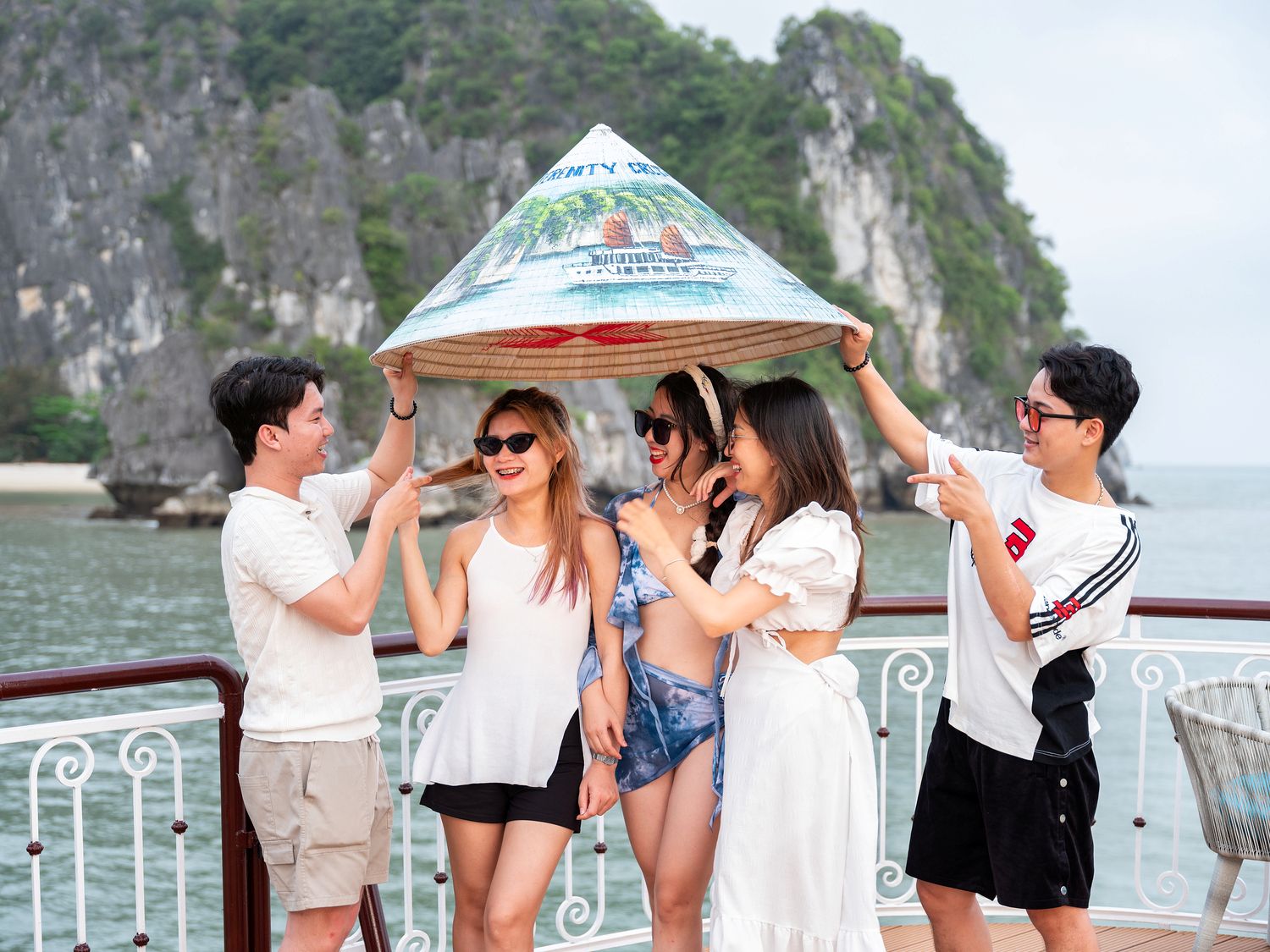
Halong Bay has been photographed millions of times, shared across every major travel platform, and featured in countless campaigns. Yet in 2026, it is still not “over.” If anything, it has become even more dominant in visual travel culture. While social media trends shift quickly—new destinations go viral, editing styles evolve, attention spans shrink—Halong Bay continues to do something very rare: it consistently looks better than expectations.
The reason is not only its natural beauty. Many places are beautiful. What makes Halong Bay different is how effortlessly it translates into visual storytelling. It is a destination where composition, lighting, scale, and atmosphere naturally align without needing heavy styling. For photographers, influencers, and casual travelers alike, it feels almost unfairly easy to capture something striking.
In 2026, when “Instagrammable” no longer just means pretty but also cinematic, emotional, and distinctive, Halong Bay still meets every criterion.
A landscape designed for the camera long before cameras existed
Halong Bay is often described as surreal, but what people really mean is that it behaves like a pre-composed scene. The thousands of limestone karsts rising from calm green waters create natural framing in every direction. Instead of searching for a single viewpoint, travelers find themselves surrounded by potential compositions.
This is what makes the bay so powerful for visual storytelling: it eliminates the struggle of finding “the shot.” Whether you are standing on a cruise deck, kayaking near a rock formation, or simply looking out of your cabin window, the environment continuously offers layered depth—foreground water, mid-ground limestone, and distant atmospheric haze.
Unlike many destinations that require careful editing or selective angles to look impressive, Halong Bay naturally produces depth perception. Even simple smartphone photos feel dimensional.
Light that transforms the same scene into multiple moods
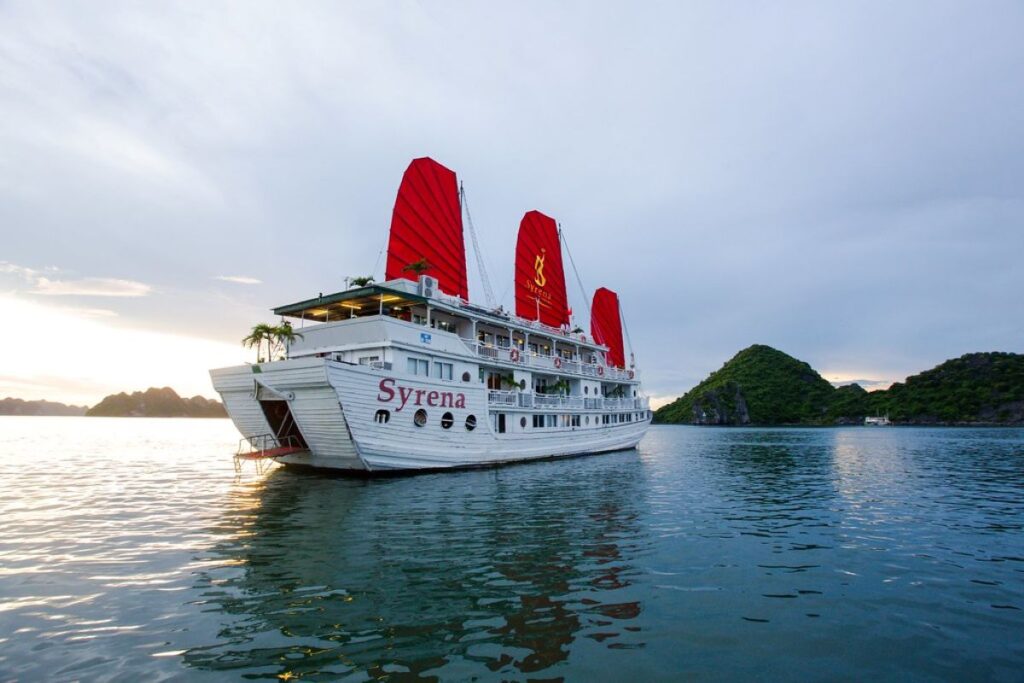
One of the most underrated reasons Halong Bay remains visually dominant is its relationship with light. The bay does not look like one place—it looks like many places depending on the hour.
In the early morning, soft mist drifts between the limestone peaks, reducing contrast and creating a dreamlike monochrome palette. Midday brings clarity, revealing sharp edges and rich emerald tones in the water. As afternoon transitions into sunset, the entire landscape begins to glow, with reflections stretching across the surface like liquid gold.
For content creators, this means one location can generate entirely different visual narratives in a single day. A calm, meditative sunrise post, a bright travel diary shot at noon, and a cinematic golden-hour video at sunset all come from the same point on the map.
In a world where audiences crave variety, Halong Bay delivers it without changing location.
The rise of “floating luxury” aesthetics
Instagram travel culture in 2026 is not just about landscapes—it is about lifestyle immersion. People no longer want to see only where you went; they want to see how it felt to be there.
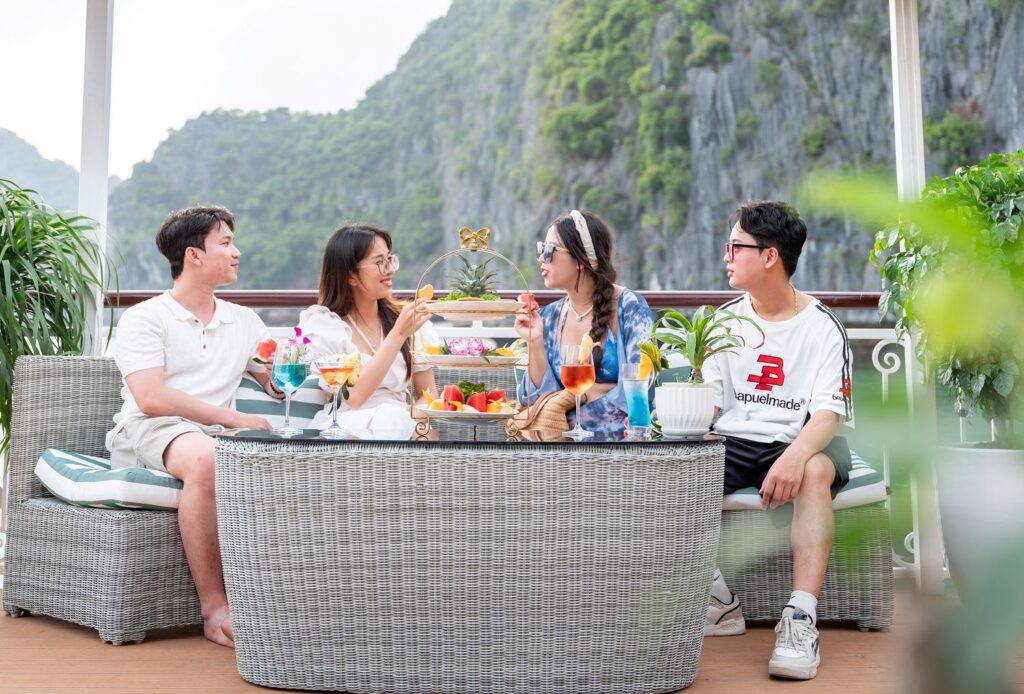
Halong Bay cruises have evolved precisely in this direction. Modern vessels are designed not just for transportation, but for visual experience. Wide glass windows, infinity-style decks, minimalist interiors, spa zones, and private balconies are now standard features in many cruises.
This creates a unique contrast that performs extremely well on social media: refined comfort placed directly inside a wild natural environment.
A single day on a cruise can produce a complete visual story:
- morning coffee with limestone silhouettes outside your cabin window
- reading on a sun deck surrounded by silence and water
- elegant dining interiors contrasted with raw ocean views
- sunset cocktails framed by dramatic rock formations
This blend of luxury and nature is exactly what modern audiences associate with aspirational travel.
Drone perspective: where Halong becomes something else entirely
If ground-level Halong Bay is impressive, aerial Halong Bay is transformative. From above, the bay reveals itself not as a collection of viewpoints but as an intricate geological pattern. Water channels weave between limestone pillars, forming natural mazes that feel almost abstract.
This is why Halong Bay continues to thrive in the era of drone content. It is not simply photogenic—it is structurally cinematic. Movement across the bay creates natural transitions between compositions, making it ideal for short-form video storytelling.
In 2026, when platforms prioritize dynamic visuals over static images, this aerial dimension keeps Halong Bay highly relevant. It is not just a background; it becomes motion, rhythm, and narrative.
Seasons that never repeat the same image twice
Many destinations become visually repetitive over time. Halong Bay avoids this through constant atmospheric variation.
Spring introduces softness—light mist and gentle skies that blur boundaries between land and water. Summer intensifies color, with deep greens and bright blues creating strong contrast. Autumn is often the clearest, offering sharp visibility and defined contours. Winter brings moodiness, with fog and low clouds turning the landscape into something almost abstract.
For photographers and content creators, this means Halong Bay is not a one-time shoot destination. It is a place that invites return visits because the visual output genuinely changes.
Two photos taken from the same location in different seasons can feel like completely different countries.

The balance between iconic identity and creative freedom
One challenge with famous destinations is overexposure. When every angle has already been posted, it becomes difficult to create something fresh. Halong Bay avoids this trap because of its scale and complexity.
Yes, there are iconic viewpoints. But beyond them lies a vast network of quieter spaces—less documented corners where composition feels personal rather than repetitive. This balance allows travelers to both capture recognizable “must-have” shots and still discover their own visual interpretations.
In other words, Halong Bay is both a postcard and a blank canvas at the same time.
Human presence that enhances rather than interrupts
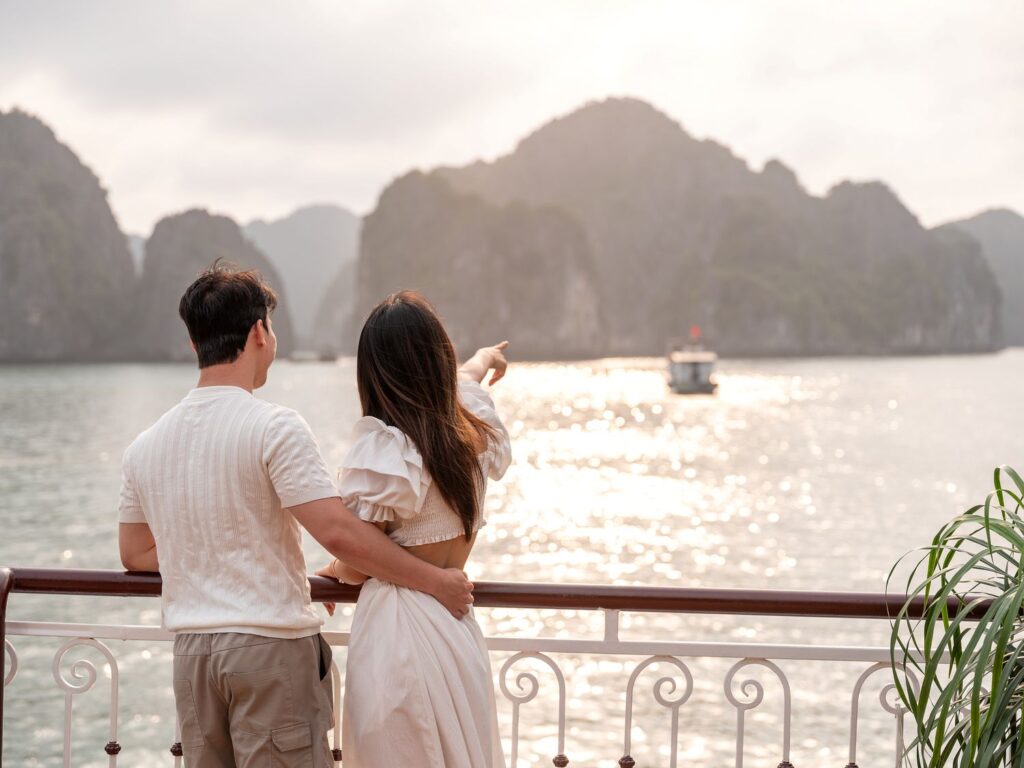
Another reason Halong Bay remains visually compelling is the subtle presence of human life. Fishing boats, floating activity, and cruise movement do not dominate the landscape—they exist within it.
This creates a visual balance that is difficult to replicate. The human element provides scale and narrative, helping viewers emotionally connect with the scene. A limestone cliff alone is impressive, but a small boat passing beneath it transforms the image into a story.
This interplay between nature and life gives Halong Bay depth beyond aesthetics. It is not just scenery; it is a living environment.
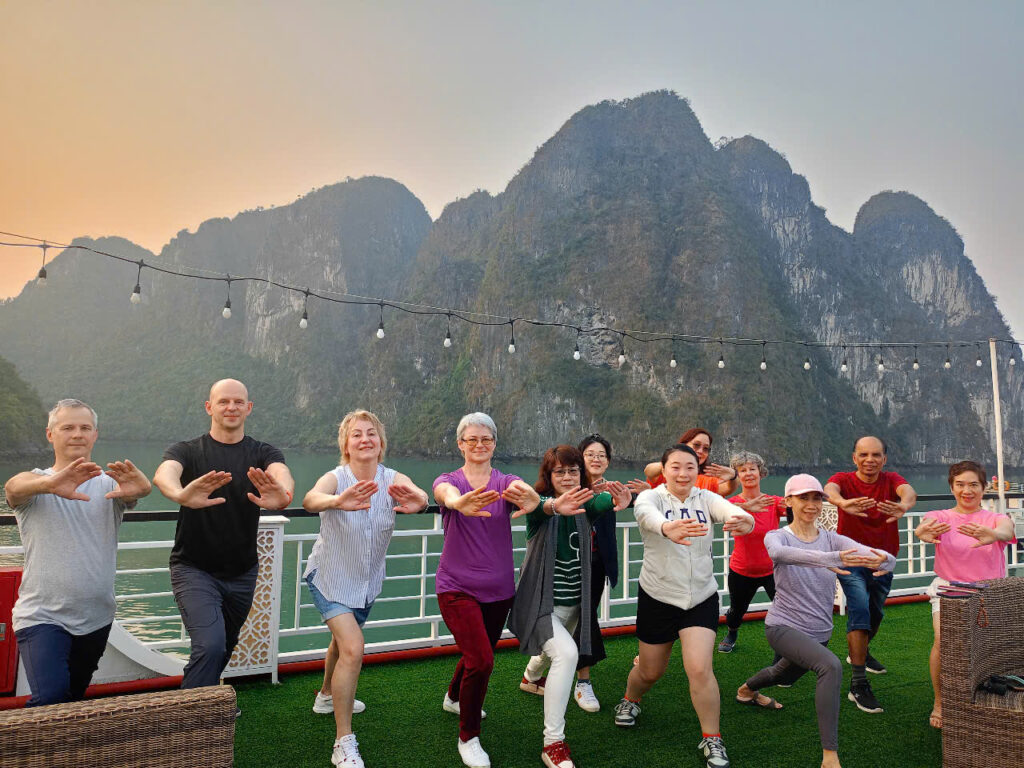
Why it still dominates in 2026
In an era where AI-generated visuals, hyper-edited imagery, and artificial travel aesthetics are becoming more common, authenticity has become a form of luxury. Halong Bay does not need to be enhanced to feel extraordinary.
Its strength lies in consistency. It looks good without effort. It changes without losing identity. It offers both grandeur and intimacy. And most importantly, it provides endless visual possibilities without requiring travelers to search too hard for them.
While other destinations trend briefly and fade, Halong Bay continues to reappear in feeds year after year—not because it is promoted heavily, but because it performs reliably across every visual platform.
Halong Bay remains Vietnam’s most Instagrammable destination in 2026 not because it tries to be, but because it inherently understands visual storytelling. It combines scale, light, atmosphere, and lifestyle into a single cohesive experience that works across photography styles, platforms, and trends.
Trends will continue to evolve. Editing styles will change. New destinations will rise. But Halong Bay’s visual identity is already timeless.
It does not chase attention—it naturally holds it.