

Kayaking in Halong Bay is one of the most immersive ways to experience this UNESCO World Heritage Site. While cruising offers comfort and panoramic views, kayaking brings travelers closer to the limestone cliffs, hidden lagoons, floating villages, and quiet corners of the bay that larger boats simply cannot reach.
Gliding silently across emerald waters, paddling through narrow rock arches, and discovering secluded caves turns Halong Bay from a sightseeing destination into a personal adventure. Whether you are a first-time paddler or an experienced kayaker, understanding the routes, difficulty levels, and local tips will help you make the most of this unforgettable activity.
Why Kayaking Is One of the Best Ways to Explore Halong Bay
Halong Bay’s landscape is defined by thousands of limestone karsts rising dramatically from the sea. Many of its most beautiful features are tucked away in shallow waters, enclosed lagoons, and low-ceiling caves. Kayaking allows travelers to move at their own pace, explore these hidden areas, and connect more deeply with nature.
Unlike motorized boats, kayaks create no noise or pollution, making them ideal for wildlife spotting and peaceful exploration. For many visitors, kayaking becomes the highlight of their Halong Bay journey, offering both adventure and tranquility in equal measure.
Popular Kayaking Routes in Halong Bay
Different areas of Halong Bay offer very different kayaking experiences. The route you choose will depend on your fitness level, time available, and desire for exploration.
Luon Cave Area
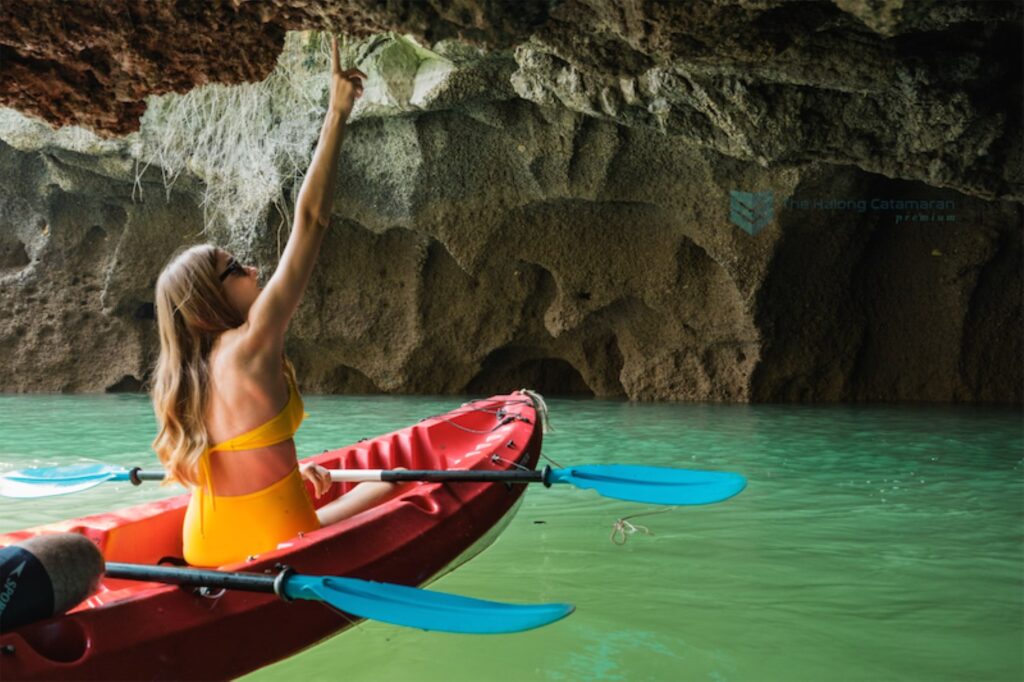
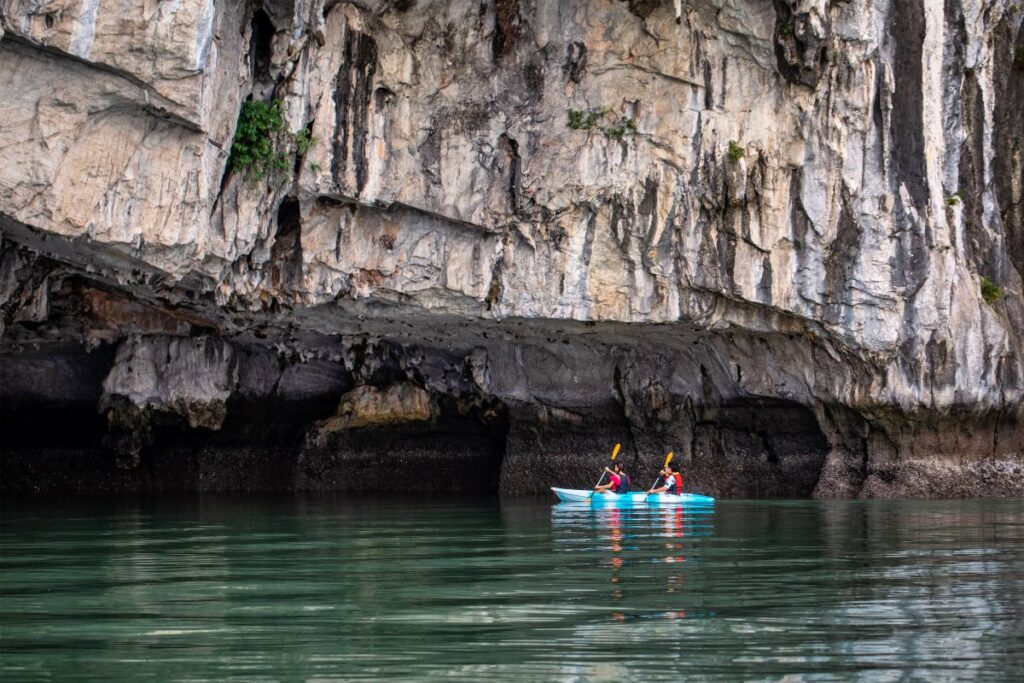
One of the most popular kayaking spots, Luon Cave features a low rock tunnel that opens into a calm, enclosed lagoon surrounded by steep limestone cliffs. The water here is usually flat and easy to paddle, making it ideal for beginners. Wildlife sightings such as monkeys and seabirds are common.
Ba Hang Fishing Village
This area combines gentle paddling with cultural discovery. Kayakers glide past floating houses, fish farms, and quiet waterways while observing daily life on the bay. The route is short and easy, suitable for all ages.
Dark and Bright Cave
Located near the Lan Ha Bay border, this route takes kayakers through a partially submerged cave into a hidden lagoon filled with sunlight reflections on limestone walls. The cave passage can feel adventurous but remains accessible for most travelers under guided conditions.
Lan Ha Bay (Extended Kayaking Routes)
Often considered calmer and less crowded than central Halong Bay, Lan Ha Bay offers longer kayaking routes with pristine waters, sandy beaches, and fewer tour boats. This area is perfect for travelers seeking a more secluded experience and longer paddling sessions.
Kayaking Difficulty Levels Explained
Kayaking in Halong Bay is generally accessible, but understanding difficulty levels helps travelers choose the right experience.
Easy Level
Suitable for beginners and families. Routes are short, waters are calm, and kayaking sessions usually last 30–45 minutes. No prior experience is required, and safety briefings are provided.
Moderate Level
Ideal for active travelers who want more exploration. These routes may last 60–90 minutes and include longer distances, narrow passages, or light currents depending on tides. Basic paddling skills and reasonable fitness are recommended.
Advanced Level
Less common on standard cruises, advanced kayaking is usually arranged through private tours or specialized operators. It may involve longer distances, open water paddling, or full-day exploration in Lan Ha Bay or remote sections of the bay. Experience and good physical condition are essential.
When Is the Best Time to Go Kayaking?
The best conditions for kayaking in Halong Bay are typically from March to May and September to November, when the weather is mild, visibility is good, and seas are relatively calm.
Summer months can be hot, but kayaking is still enjoyable during early mornings or late afternoons. Winter months may bring cooler temperatures and misty scenery, creating a unique atmosphere, though water conditions should always be checked before paddling.
Insider Tips for an Unforgettable Kayaking Experience
Choose a cruise or tour that prioritizes kayaking rather than treating it as a short add-on. Some itineraries offer longer paddling times and access to quieter areas of the bay.
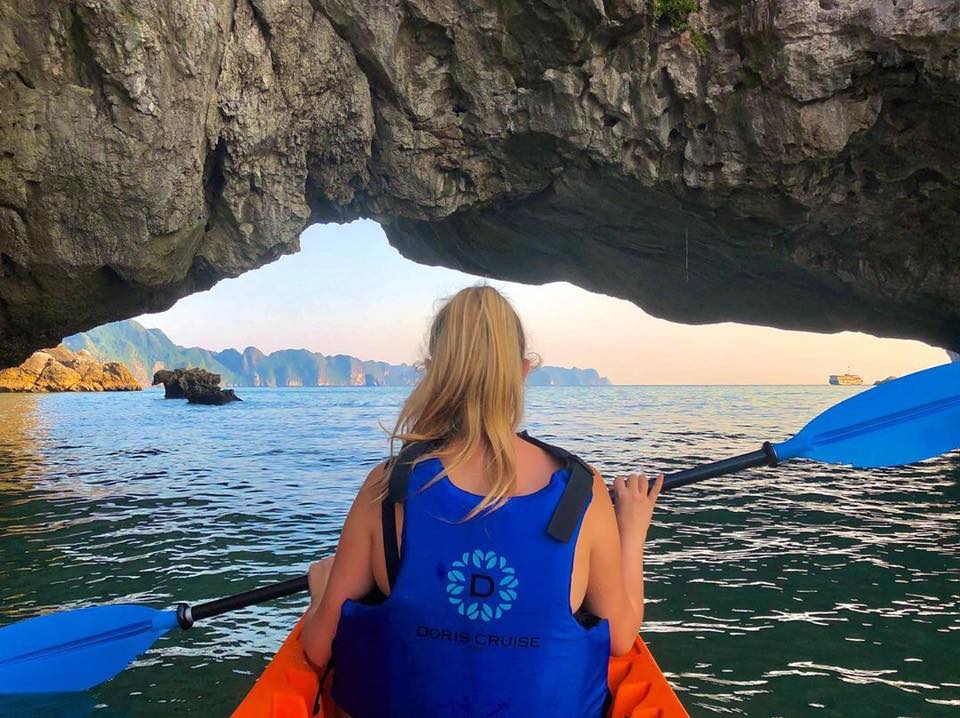
Always check tide schedules. Water levels affect cave access, especially in areas like Luon Cave and Dark and Bright Cave. Local guides plan routes carefully, but being aware enhances your experience.
Wear quick-dry clothing and water-friendly shoes. Even calm kayaking can involve splashes, and getting wet is part of the adventure.
Bring waterproof protection for cameras or phones. Some of the best photo opportunities appear unexpectedly when entering lagoons or passing through caves.
Most importantly, paddle slowly and observe your surroundings. Halong Bay reveals its magic in small details: reflections on the water, echoes inside caves, and the quiet rhythm of life on the bay.
Is Kayaking in Halong Bay Safe?
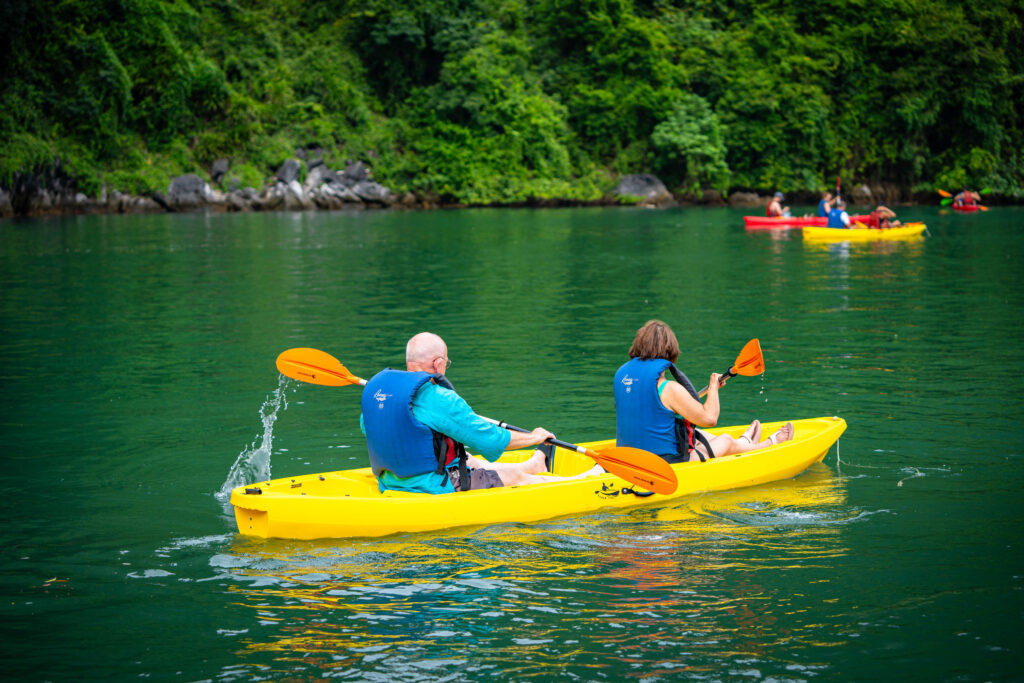
Kayaking in Halong Bay is considered very safe when organized by licensed tour operators. Life jackets are mandatory, safety instructions are provided, and routes are carefully selected based on weather and sea conditions. For solo travelers, families, and first-time kayakers, guided kayaking offers both safety and peace of mind.
A Deeper Way to Experience Halong Bay
Kayaking transforms Halong Bay from a scenic backdrop into a living landscape. It allows travelers to move beyond observation and become part of the environment, even if just for an hour.
For those seeking a balance between adventure, nature, and authenticity, kayaking is not just an activity in Halong Bay — it is an essential part of the journey.