
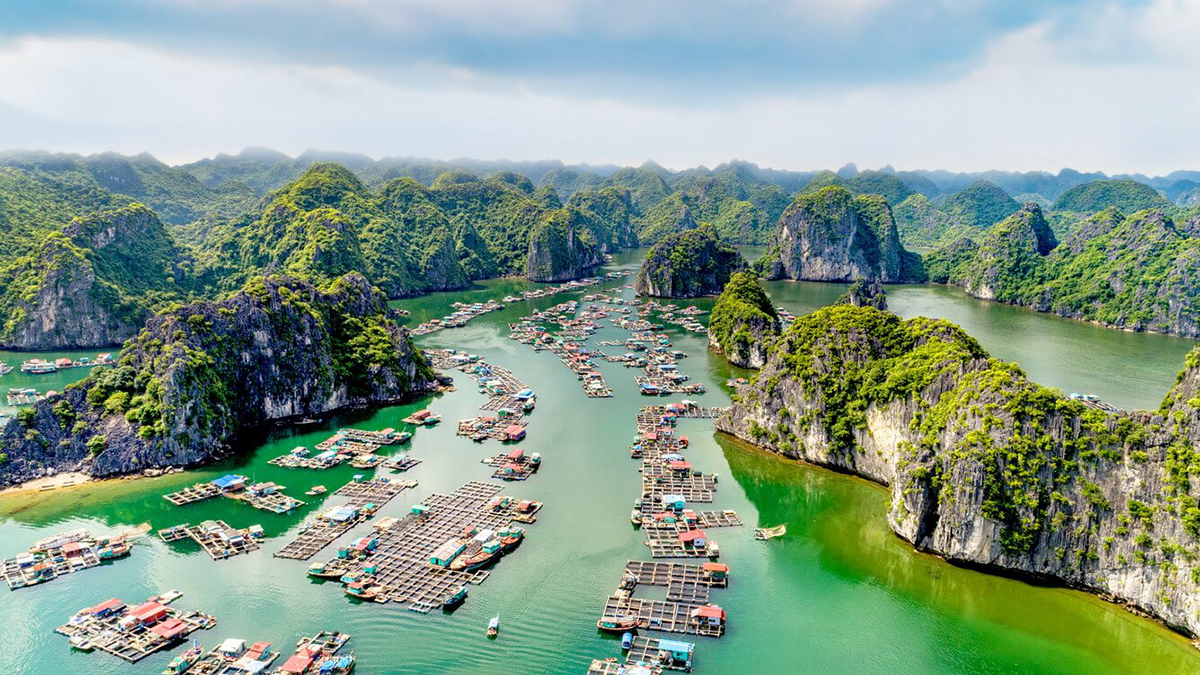
Beyond the breathtaking limestone cliffs and emerald-green waters, Halong Bay holds another fascinating treasure — its floating fishing villages. These unique communities, existing peacefully for generations, offer travelers a rare chance to witness a way of life that harmonizes with nature and the sea.
Join us as we explore the charm, history, and daily rhythm of Halong Bay’s floating villages — where people live, work, and dream on the water.
1. The Story Behind Halong’s Floating Villages
The floating villages of Halong Bay date back hundreds of years, when fishermen built floating houses to stay close to their fishing grounds.
Each village is a self-contained world with floating homes, schools, fish farms, and even small temples — all gently rocking on the sea.
Today, there are several well-known villages, including:
- Cua Van Floating Village: The largest and most visited, known for its cultural preservation center.
- Vung Vieng Village: A quieter, less touristy spot offering an authentic glimpse of fishermen’s lives.
- Ba Hang and Cong Dam Villages: Smaller communities surrounded by stunning limestone formations.
Did you know?
Cua Van was listed among the world’s most beautiful ancient villages by Journeyetc.com for its serene setting and cultural heritage.
2. Daily Life on the Water
Life in these villages revolves around the tides and the catch of the day.
Fishermen head out before sunrise in their small wooden boats, while women prepare meals or tend to floating fish cages.
Children learn to row boats before they can even walk properly — and many attend a floating school, where lessons are often held under a simple roof with the bay as their backdrop.
“The sea is our home, our road, and our livelihood,” one villager shared — a sentiment that perfectly describes the deep bond between people and water here.
3. What to Experience When Visiting
When visiting a floating village in Halong Bay, you can:
- Take a bamboo boat ride rowed by locals through narrow channels and limestone caves.
- Visit floating houses and fish farms to see how seafood is raised and traded.
- Join a cooking or fishing demonstration on some cruises.
- Meet local families and learn how they adapt to living entirely on the water.
Travel Tip: Choose responsible tour operators that support local communities, ensuring your visit benefits the villagers directly.
4. Photography Tips
- Golden Hour Magic: Early morning and late afternoon light beautifully reflect on the calm bay surface.
- Portraits: Ask permission before photographing locals — they’re friendly but appreciate respect.
- Wide Shots: Capture colorful floating houses with limestone cliffs in the background for the best contrast.
5. The Changing Face of the Villages
In recent years, many residents have moved to the mainland for education and better living conditions. However, eco-tourism and cultural preservation projects are helping maintain the villages as living museums of Vietnam’s maritime heritage.
Some cruises now include Cua Van Cultural Center, where you can explore exhibits about fishing traditions, local tools, and daily artifacts — a meaningful way to connect with Halong’s human story beyond its natural beauty.
6. Responsible Travel Tips
To keep Halong Bay’s floating villages beautiful for generations to come:
- Avoid giving money or candy to children — buy local crafts instead.
- Use reusable water bottles and avoid single-use plastics.
- Follow your guide’s instructions when visiting homes or fish farms.
- Respect privacy and take photos with permission.
A visit to Halong Bay’s floating villages is more than just sightseeing — it’s a journey into a disappearing world where simplicity, resilience, and harmony define daily life.
As you glide past the colorful houses and smiling fishermen, you’ll gain a deeper appreciation for Vietnam’s maritime soul and the quiet strength of its people.