
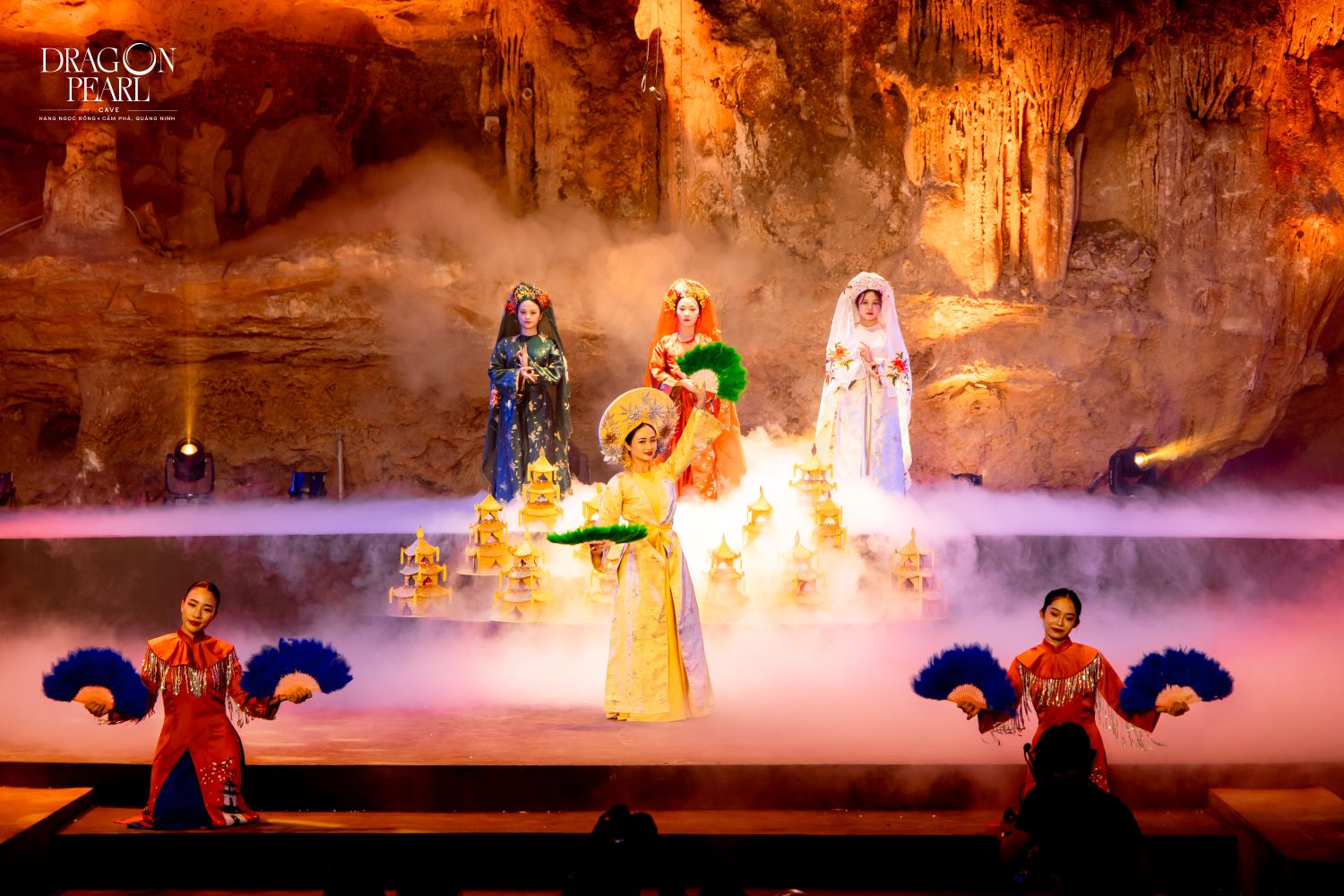
Nestled within the towering limestone cliffs of Halong Bay's protected core zone sits one of Vietnam's most spectacular underground formations: Dragon Pearl Cave. This UNESCO World Heritage geological wonder showcases over 300 million years of natural artistry, drawing visitors from across the globe to witness its breathtaking stalactites, stalagmites, underground lakes, and crystalline chambers. With its dramatic formations, mystical ambiance, and rich geological significance, Dragon Pearl Cave represents nature's patient mastery—a hidden masterpiece carved by time itself.
The Geological Wonder: Understanding Cave Formation and Structure
Dragon Pearl Cave is a testament to one of Earth's most fascinating geological processes: the dissolution of limestone by acidic groundwater over millions of years. The cave system was formed during the Mesozoic and Cenozoic Eras, when Halong Bay's entire region was submerged beneath ancient seas. As tectonic activity gradually lifted the limestone layers above sea level, freshwater—charged with carbonic acid from decomposing vegetation—began its patient work of carving pathways through the rock.
The cave's formation is directly linked to Halong Bay's broader karst topography. Karst landscapes, created by the dissolution of soluble bedrock (primarily limestone and dolomite), are among the most scientifically significant geological features on Earth. Halong Bay's karst system is one of the world's most pristine examples, and Dragon Pearl Cave represents one of its finest underground developments.
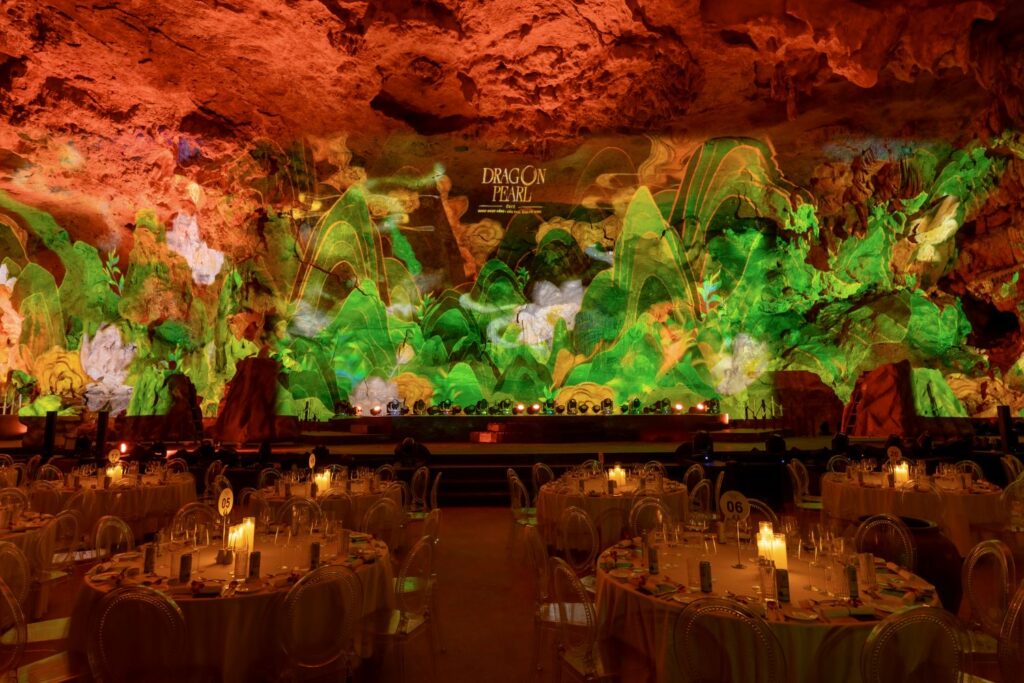
The cave's Vietnamese name—"Hang Ngọc Rồng," which translates to "Dragon Pearl Cave"—draws inspiration from its most distinctive feature: luminous stalactite formations that resemble a glowing pearl suspended within the cavern. Local legends, passed down through generations, speak of a guardian dragon that once inhabited this sacred space, protecting its treasures from those who would disturb its rest.
What makes Dragon Pearl Cave structurally unique is its multi-chamber configuration. The primary chamber, known as the "Grand Hall" among local guides, spans approximately 50 meters in length and rises to heights of 30 meters in certain sections. Secondary chambers, accessible through carefully maintained pathways, reveal progressively more intimate spaces where the cave's geological artistry reaches its most intricate expressions.
The Natural Artwork: The Science and Beauty of Speleothems
Speleothems—the scientific term for stalactites, stalagmites, flowstone, and other mineral formations within caves—are the true artistry of Dragon Pearl Cave. Each formation tells a story encoded in its mineral composition, growth rings, and structural complexity. Understanding these formations requires appreciation for both geological science and aesthetic wonder.
Stalactites: Crystal Chandeliers of the Underground
Stalactites hang from the ceiling like frozen waterfalls, created through an extraordinary process that unfolds over centuries. Water percolating through limestone dissolves calcium carbonate, creating a mineral-rich solution. As this solution reaches the cave ceiling and emerges through small cracks, the water evaporates, leaving behind a microscopic ring of calcite. Each additional droplet adds another ring, building the stalactite millimeter by millimeter across generations.
In Dragon Pearl Cave, stalactites display remarkable variety. Some are thin and needle-like, resembling delicate spears of crystallized light. Others are thicker and more robust, with ribbed surfaces that reflect light in mesmerizing patterns. The most impressive formations are the "soda straws"—thin, tubular stalactites that appear impossibly fragile yet have survived for tens of thousands of years. Some exceed three meters in length, with diameters no wider than a finger, demonstrating the cave's stable moisture environment where constant water flow has allowed these delicate structures to persist.
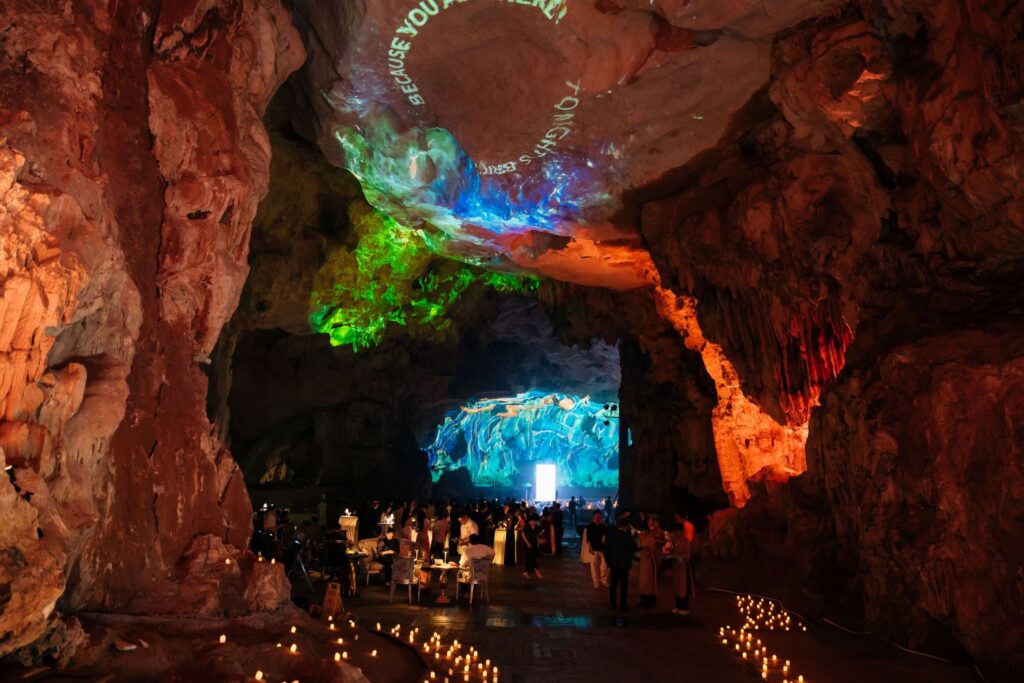
Certain stalactite formations in Dragon Pearl Cave display layered coloration, ranging from cream white to amber and rust tones. These color variations indicate different mineral concentrations at different points in time, reflecting climatic changes and geological shifts across millennia. When illuminated by the cave's natural light sources, these formations glow with an almost ethereal quality, justifying the cave's reputation as a pearl within the mountain.
Stalagmites: Sentinels Rising from the Cave Floor
While stalactites descend from above, stalagmites build upward from the cave floor through the same patient process. As water droplets fall from stalactites and splash onto the ground, they deposit their mineral load, creating cone-shaped formations that grow upward. Over millennia, some stalagmites develop rounded, bulbous tops, while others remain more pyramidal and pointed.
Dragon Pearl Cave contains stalagmites of extraordinary proportions. The largest formations tower more than five meters high, their bases spanning several meters in diameter. These formations represent uninterrupted mineral deposition for hundreds of thousands of years—a testament to the cave's stable geological conditions and consistent water flow patterns.
Many of the cave's most impressive features are formations where stalactites and stalagmites have merged over time, creating continuous calcite columns that anchor the cave's chambers. These formations, called "curtains" or "pillars," are among the most photographically stunning elements of the cave. Some pillars display spiral or twisted patterns, created by water flowing down the formation's sides, creating a mesmerizing natural sculpture that rivals the finest artwork crafted by human hands.
Flowstone, Curtains, and Other Mineral Masterpieces
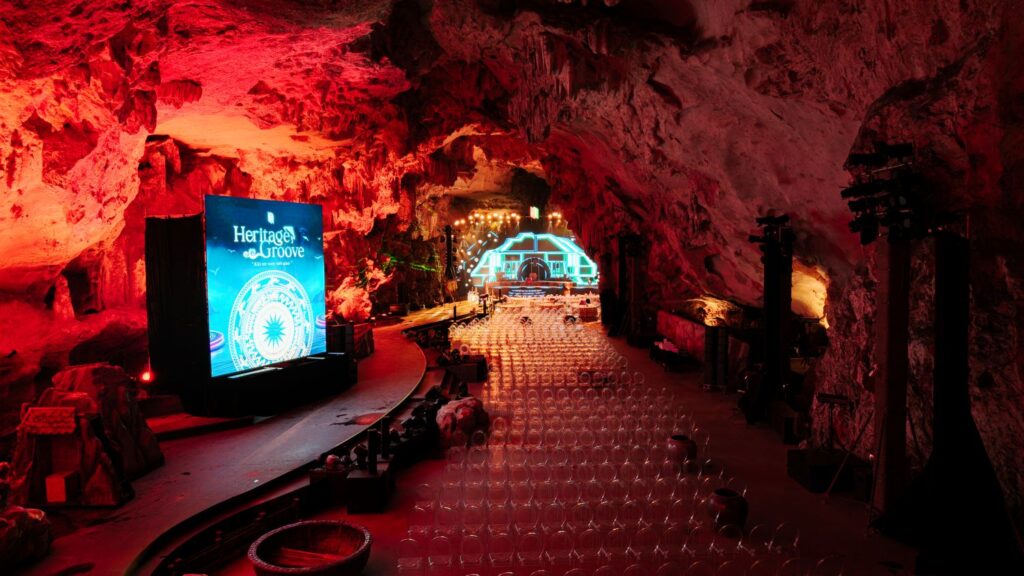
Beyond stalactites and stalagmites, Dragon Pearl Cave features numerous other speleothem varieties that showcase nature's creative capabilities. Flowstone—calcite deposits that cascade down the cave walls like frozen waterfalls—creates spectacular sheet formations in several chambers. Some flowstone formations span entire wall sections, with subtle color banding that reveals the periodic rise and fall of water levels across geological time.
Curtain formations, also called drapery, hang from the cave ceiling in delicate waves, resembling mineral silk or the folds of an ancient tapestry. These form when mineral-rich water flows along a sloping ceiling, depositing calcium carbonate in thin, continuous sheets. The most spectacular curtains in Dragon Pearl Cave display subtle color variations and translucent qualities—when backlighted by the cave's natural illumination, these formations appear almost ethereal.
The cave also contains numerous smaller formations: helictites (branching formations that defy gravity), cave pearls (smooth spheres formed by water rolling stones in small pools), and delicate aragonite crystals that sparkle like diamonds when illuminated. Pool minerals create crystal formations around the edges of underground lakes, while mineral-rich mud deposits reveal the geological complexity of the cave's hydrological system.
The Geological Timeline: Reading the Cave's History
Dragon Pearl Cave is essentially a natural archive—a geological record of Earth's climate and environmental changes preserved in mineral form. By studying the cave's formations, geologists can reconstruct past environmental conditions dating back hundreds of thousands of years.
The cave's development accelerated during warmer, wetter periods when rainfall increased, enhancing water's dissolving capacity and accelerating stalactite and stalagmite growth. During colder, drier periods (such as ice ages), the cave's development slowed dramatically. Evidence of these climate cycles is literally written into the formations themselves—thick deposits indicate wet periods, while thinner layers suggest drier eras.
The cave's current-day appearance represents approximately 300 million years of geological development, but the formations visitors encounter today—the striking stalactites and stalagmites—have developed primarily over the past 500,000 years, with continued growth occurring at a rate of approximately 1-5 centimeters per century. This means some formations are still actively growing, making Dragon Pearl Cave a living geological system rather than a static museum piece.
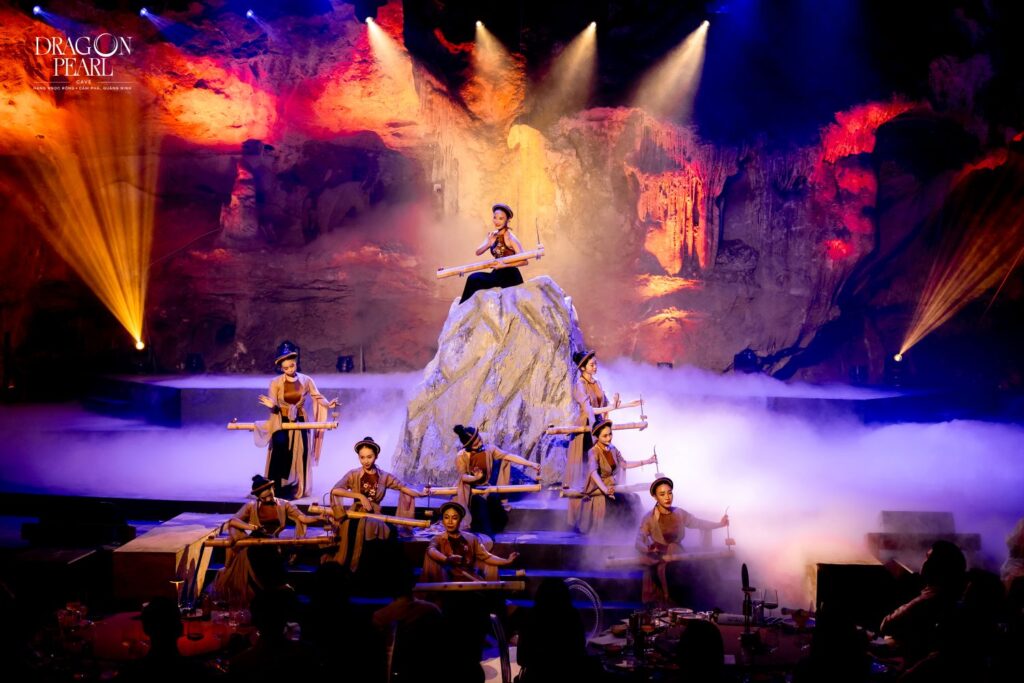
The Underground Landscape: A Journey Through Geological Chambers
Exploring Dragon Pearl Cave is a progression through distinct geological environments, each with its own character and significance. The journey begins at the cave entrance, where daylight illuminates the threshold between the surface world and the underground realm.
The Grand Hall: First Chamber
Upon entering the primary chamber, visitors are immediately struck by the sheer scale of the space. The Grand Hall opens dramatically, with limestone walls rising 30 meters or more toward the ceiling. Natural light floods through the cave opening, illuminating the chamber in soft, diffuse illumination that highlights formations without creating harsh shadows. This natural lighting environment has proven ideal for photographic documentation and allows visitors to appreciate the cave's true colors—not enhanced by artificial lighting, but revealed in the gentle glow of natural sunlight filtered through atmosphere and rock.
The chamber floor consists primarily of calcite debris—fragments of fallen formations, crystalline sediments, and mineral deposits accumulated over millennia. Walking across this floor produces a distinctive crunching sound, a gentle reminder of the cave's ongoing geological processes. In certain areas, the floor reveals well-preserved formations with pristine surfaces, while other sections show weathering patterns indicating thousands of years of exposure.
The Grand Hall's walls display layered geological structures—evidence of ancient sea levels and depositional cycles. Some sections of wall show clear stratification, with different colored limestone layers stacked in neat sequences. Other areas display fault lines and fractures through which water historically flowed, carving the pathway that would eventually become the cave system.
The Pearl Chamber: Inner Sanctum
Progressing deeper into the cave system, visitors enter the Pearl Chamber—an inner sanctum where the cave's most legendary formation resides. Here, the stalactite formations reach their finest expression, with multiple formations creating an almost cathedral-like atmosphere. The light grows progressively more diffuse as the chamber receives diminishing natural illumination, requiring visitors' eyes to adjust to the increasing darkness.
In the Pearl Chamber's center, a formation legend has dubbed "The Pearl" hangs from the ceiling—a particularly lustrous stalactite formation with a bulbous base resembling a precious pearl. When illuminated by careful natural light or guide lighting, this formation displays an almost translucent quality, appearing to glow from within. This formation, more than any other, inspired the cave's name and remains the cave's most iconic geological feature.
The Pearl Chamber also contains several massive pillars—formations where stalactites and stalagmites have merged—that create a forest-like effect. Navigating through this "forest" of stone requires careful attention to the pathways that have been developed and maintained for visitor safety. The formations press close from all sides, creating an intimate geological experience that emphasizes the cave's underground magnitude.
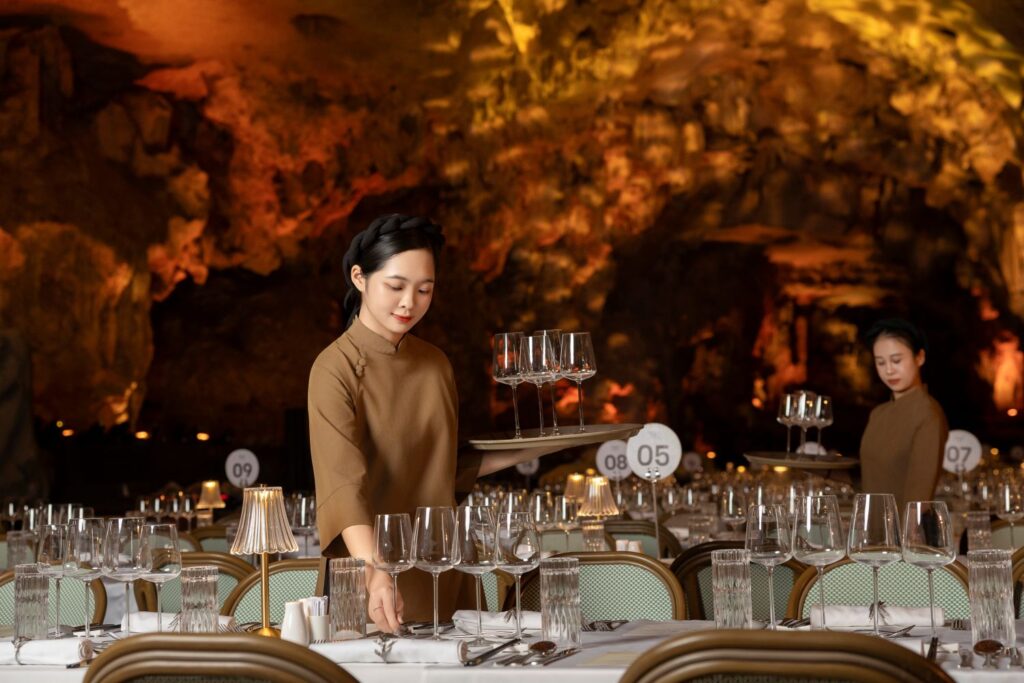
The Gallery of Formations: Secondary Chambers
Beyond the main chambers lies a network of smaller passages and alcoves, each containing unique geological features. These areas, collectively referred to as the Gallery of Formations, showcase the cave's full range of speleothem varieties. Here, delicate curtain formations hang from low ceilings, requiring visitors to move carefully to avoid disturbing these fragile geological treasures.
One particularly notable section contains a series of underground pools—crystalline bodies of water that reflect formations from the ceiling, creating a mirror-like doubling effect. These pools, which remain isolated from outside water sources, contain unique ecosystems adapted to the perpetual darkness and consistent temperatures of the cave environment. The mineral content of these pools contributes to their crystal clarity, allowing visibility to surprising depths.
The Hydrological System: Understanding Water's Role
Water is the artist that carved Dragon Pearl Cave and continues to create and modify its formations. The cave's current hydrological system is remarkably sophisticated. Surface water percolates through the limestone plateau above the cave, entering through numerous small fractures and fissures. This water, enriched with carbonic acid from decomposing vegetation in the soil, follows gravitational paths downward, eventually reaching the cave system.
Within the cave, water flows through multiple pathways, some visible to visitors as flowing streams, others hidden within the limestone matrix itself. This water creates new passages while simultaneously depositing minerals that build formations. The balance between dissolution (creating passages) and deposition (building formations) creates the cave's dynamic geological equilibrium.
The cave's underground lakes, located in lower chambers not typically open to visitor access, represent the system's lower water table. These lakes' water clarity and mineral composition provide valuable information about the cave's ongoing geological processes. Regular monitoring of water chemistry helps geologists understand how climate changes, rainfall patterns, and environmental conditions affect cave development.
A Living Geological System: Ongoing Change and Growth
Unlike museum exhibits that remain static and unchanged, Dragon Pearl Cave is a living geological system. Formations continue to grow, water continues to flow, and chemical processes continue their patient work of reshaping the cave environment. This ongoing development makes the cave not merely a monument to geological processes, but an active participant in Earth's dynamic geological story.
Geologists monitor the cave's formations regularly, documenting growth rates, tracking water flow changes, and measuring shifts in the broader geological structure. Research conducted within the cave has contributed significantly to understanding karst hydrology, speleothem formation rates, and paleoclimate reconstruction techniques.
The cave's continued evolution also creates challenges for preservation. Tourism, while generating important economic benefits and cultural appreciation, must be carefully managed to prevent damage to this irreplaceable geological treasure. Paths have been specifically designed to minimize damage to formations, and visitor numbers are carefully controlled to prevent excessive wear on the cave's delicate ecosystem.
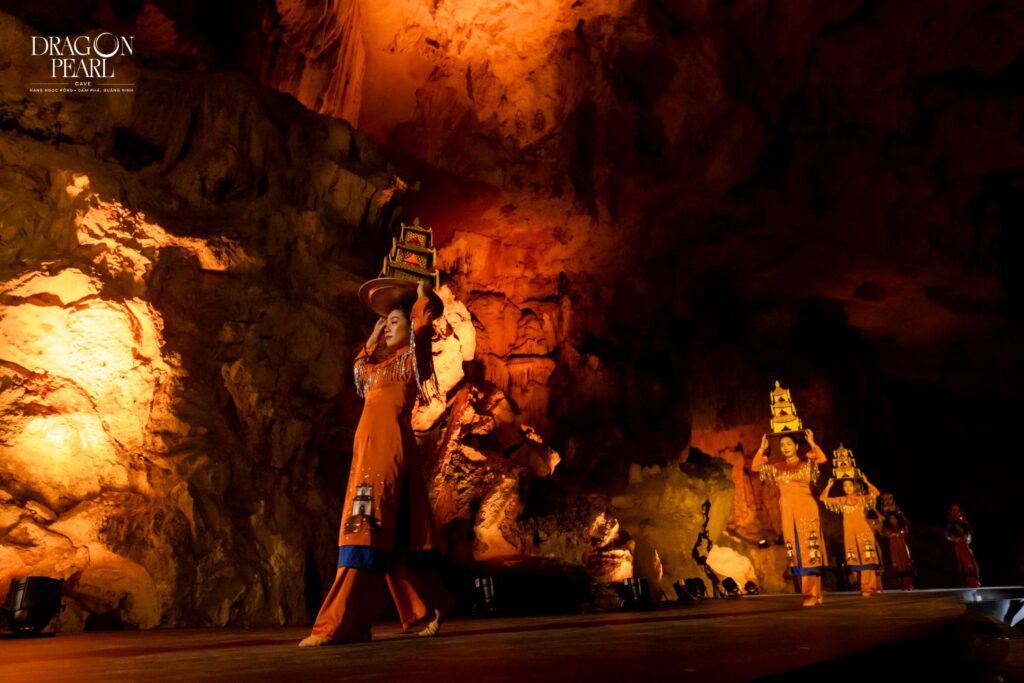
The Experience: Exploring Dragon Pearl Cave with Expert Guides
While Dragon Pearl Cave's geology is profound, the experiential aspects of cave exploration are equally compelling. Walking through these ancient chambers creates a visceral connection to geological time—a sense of standing within a space that existed long before humans emerged on Earth and will persist long after humanity vanishes.
The cave maintains a consistent temperature of approximately 20-22°C (68-72°F) throughout the year, making it a refreshing escape during Halong Bay's hot, humid summer months, while remaining pleasantly cool during cooler seasons. Humidity levels remain relatively stable, typically ranging from 90-95 percent, contributing to the cave's remarkable preservation and ongoing stalactite development.
The cave's lighting conditions create an ever-changing visual experience. Natural light illuminates the outer chambers with warm, golden tones that reveal true colors and create dramatic shadows. As visitors progress deeper, natural light diminishes, and the cave's innate darkness becomes increasingly apparent. This transition from light to darkness creates an almost meditative experience—visitors gradually become adapted to the underground realm, experiencing the cave as creatures adapted to perpetual darkness might perceive it.
Photography within the cave presents unique challenges and opportunities. Natural light photographers must work with limited illumination and longer exposure times, while those using supplementary lighting can create dramatic contrast between illuminated formations and surrounding darkness. The cave's dramatic formations, unusual perspectives, and play of light create exceptional photographic possibilities.
Our Halong Bay Cave Exploration Tours: Experiencing Dragon Pearl Cave
Dragon Pearl Cave is best experienced as part of a comprehensive Halong Bay exploration tour, which combines cave exploration with cruising through the limestone karst landscape and experiencing the bay's broader geological wonders. Our specialized cave exploration tours feature Dragon Pearl Cave as a primary destination, supplemented by visits to other significant cave systems and geological features.
What Our Tours Include
- Expert Geological Interpretation: Knowledgeable guides trained in geology and cave formation provide detailed explanations of stalactite and stalagmite development, karst geology, and environmental history. Guides bring the cave's silent story to life through compelling narratives and scientific explanation.
- Safe, Maintained Access: All pathways through the cave are carefully maintained with handrails, lighting, and regular safety inspections. We maintain strict adherence to UNESCO guidelines for protected site visitation.
- Extended Exploration Time: Unlike rushed commercial tours, our excursions allow 60-90 minutes within the cave, providing adequate time to absorb the geological wonder without feeling hurried through this extraordinary environment.
- Small Group Dynamics: We maintain intimate group sizes (typically 8-12 visitors per guide) to enhance the experience, minimize environmental impact, and allow for personalized interaction and questions.
- Photographic Opportunities: Multiple stops are built into the itinerary specifically for photography, allowing visitors adequate time to capture the cave's dramatic formations and play of light.
- Cultural Context: Guides share the cave's significance in local Vietnamese heritage and culture, connecting geological wonder to human history and tradition.
- Environmental Responsibility: All tours emphasize conservation practices and the importance of protecting this UNESCO World Heritage site for future generations. Visitors leave with genuine understanding of why preservation matters.
- Comprehensive Bay Experience: Cave exploration is combined with other Halong Bay highlights—dramatic karst scenery, fishing village visits, sunrise experiences, and encounters with local culture—creating a complete immersion in the region's geological and cultural character.

Tour Duration and Intensity
Our standard Halong Bay cave exploration tours range from 2-4 days, with varying intensity levels appropriate for different fitness and interest levels. Shorter 2-day itineraries allow rapid highlights, while our full 4-day expeditions provide comprehensive geological education, cultural experiences, and leisure time to absorb the bay's majesty.
The cave exploration portion itself is moderately demanding—pathways involve some climbing, descending, and careful maneuvering through narrow passages. Visitors should be reasonably mobile and comfortable with modest physical exertion. Maximum comfort footwear is essential, and guides provide recommendations for appropriate clothing and gear.
Best Times to Visit: Seasonal Considerations
Dragon Pearl Cave can be visited year-round, though certain seasons present advantages and disadvantages:
October through April: Ideal Season
These months offer the most favorable conditions for cave exploration. Temperatures range from 15-25°C (59-77°F), humidity is lower than summer levels, and rainfall is minimal. The cave's interior maintains its consistent 20-22°C temperature, making the contrast with outside air less dramatic. Natural light penetration is excellent during this period due to clear skies and lower atmospheric haze. This season typically experiences moderate rainfall, which maintains water flow for stalactite and stalagmite development without creating dangerous water levels.
May through September: Monsoon Season
Summer months bring higher temperatures (30-40°C/86-104°F), elevated humidity, and frequent rainfall associated with the Southwest Monsoon. The cave's interior remains comfortably cool, providing excellent relief from outside heat. However, heavy rainfall can increase water flow within the cave system, potentially affecting pathway conditions. Despite these considerations, many visitors appreciate the summer season's dramatic lighting effects, as higher humidity creates more diffuse natural illumination within the cave.
Preservation and Conservation: Protecting a Geological Treasure
Dragon Pearl Cave exists within Halong Bay's UNESCO World Heritage core zone, affording it the highest level of international protection. Vietnamese national authorities, working with UNESCO, have implemented comprehensive conservation strategies to ensure the cave's preservation while allowing responsible tourism access.
Key conservation measures include:
- Visitor capacity limitations to prevent excessive wear and environmental degradation
- Restricted access to certain chambers containing particularly fragile formations
- Regular monitoring of water chemistry, geological stability, and formation growth rates
- Maintenance programs ensuring pathways remain safe without damaging formations
- Educational initiatives emphasizing visitor responsibility for preservation
- Scientific research programs studying cave geology and environmental history
- Collaboration between tourism operators, government agencies, and conservation organizations
Visitors contribute to preservation simply by respecting established guidelines: remaining on designated pathways, refraining from touching formations, avoiding photography flash that might disturb cave ecosystems, and respecting closure areas that allow formations to remain undisturbed.

Beyond the Cave: Dragon Pearl Cave in Broader Geological Context
While Dragon Pearl Cave is remarkable, it represents just one element within Halong Bay's comprehensive karst system. The bay contains thousands of formations—from spectacular karst peaks rising from the sea to hidden caves accessible only to experienced spelunkers. Dragon Pearl Cave's accessibility and impressive formations make it the ideal introduction to Halong Bay's geological character.
Visitors interested in deeper geological exploration can combine Dragon Pearl Cave visits with explorations of other significant caves: Sung Sot Cave (Surprise Cave) with its cathedral-like chambers, Thien Cung Cave with its underground lake, or the rugged beauty of Dau Go Cave. Each offers distinct geological features and formations, creating a comprehensive understanding of karst development in Halong Bay.
For geology enthusiasts, Halong Bay offers opportunities for interaction with active geological processes—observing limestone weathering, understanding water flow patterns, witnessing ongoing cave development, and contemplating the profound timescales of geological change.
Practical Information for Visitors
Physical Requirements
Cave exploration requires moderate physical fitness. Pathways involve stairs, some climbing, and maneuvering through passages. Visitors should be comfortable with modest physical exertion and reasonably mobile. Children as young as 5-6 years can typically navigate the main chambers with appropriate assistance. Pregnant women, individuals with severe knee/joint problems, or those with respiratory conditions should consult guides before committing to cave exploration.
What to Bring
Comfortable, closed-toe hiking shoes are essential—cave floors can be slippery and uneven. While the cave maintains consistent temperature, layers are recommended for comfort as temperatures can feel cool during extended stays. A light jacket or sweater is advisable. Waterproof camera bags protect equipment from the cave's high humidity. Sun protection is unnecessary underground but important for the boat journey to and from the cave.
Photography Tips
Photography enthusiasts should bring high ISO-capable cameras capable of functioning in low light conditions. Tripods are typically not permitted in the cave due to space constraints and safety considerations. Natural light photography requires patience and often produces the most atmospheric results. Guides can recommend optimal shooting positions and times for specific formations.
Accessibility Considerations
While the cave's primary chambers are accessible to most visitors, certain sections of the Gallery of Formations involve more challenging navigation. Mobility-impaired visitors should discuss their specific limitations with tour operators, who can determine which portions of the cave are appropriately accessible for individual circumstances.
Why Dragon Pearl Cave Matters: More Than a Tourist Destination
Dragon Pearl Cave transcends its role as a tourist attraction. It is a geological archive—a record of environmental history spanning hundreds of thousands of years. It is a scientific laboratory—a site where researchers study karst hydrology, cave formation processes, and paleoclimate reconstruction. It is a natural treasure—a geological artwork shaped by time and nature that rivals humanity's greatest artistic achievements. Most importantly, it is a reminder of our planet's profound antiquity and the forces that continuously reshape Earth's surface.
Standing within Dragon Pearl Cave, surrounded by stalactites and stalagmites that have developed over millennia, visitors inevitably experience perspective shift. Individual human concerns diminish in significance when confronted with geological timescales—formations that took hundreds of thousands of years to develop; cave systems that have existed longer than the species of all currently living creatures; processes that will continue reshaping Earth long after humanity vanishes.
This perspective, this geological humility, represents Dragon Pearl Cave's most valuable offering to visitors. The cave's beauty is remarkable, its formations impressive, its scientific significance substantial—but perhaps its greatest gift is the reminder that we inhabit a dynamic, evolving planet that operates according to timescales and processes vastly exceeding human comprehension.
Plan Your Dragon Pearl Cave Adventure Today
Dragon Pearl Cave awaits—a geological marvel, a geological classroom, and a geological cathedral all in one. Whether you're a geology enthusiast seeking to understand karst processes, a photographer drawn to dramatic natural compositions, a cultural explorer interested in local traditions, or simply someone seeking to encounter natural wonder in its most pristine form, Dragon Pearl Cave offers an unforgettable experience.
Our Halong Bay cave exploration tours combine Dragon Pearl Cave with the bay's comprehensive natural and cultural attractions, creating immersive multi-day experiences that transform how visitors understand geology, appreciate natural beauty, and recognize their place within Earth's vast geological story.
The cave has existed for millions of years and will persist for millions more, patiently adding millimeters to its formations with each passing century. Your visit becomes part of this ongoing story—a moment in the cave's vast temporal existence where human consciousness briefly encounters geological eternity.