

There is a moment on every Halong Bay journey that stays with travelers forever. It isn’t when they first step onto the cruise ship, nor is it when they watch the sunset from the sundeck.
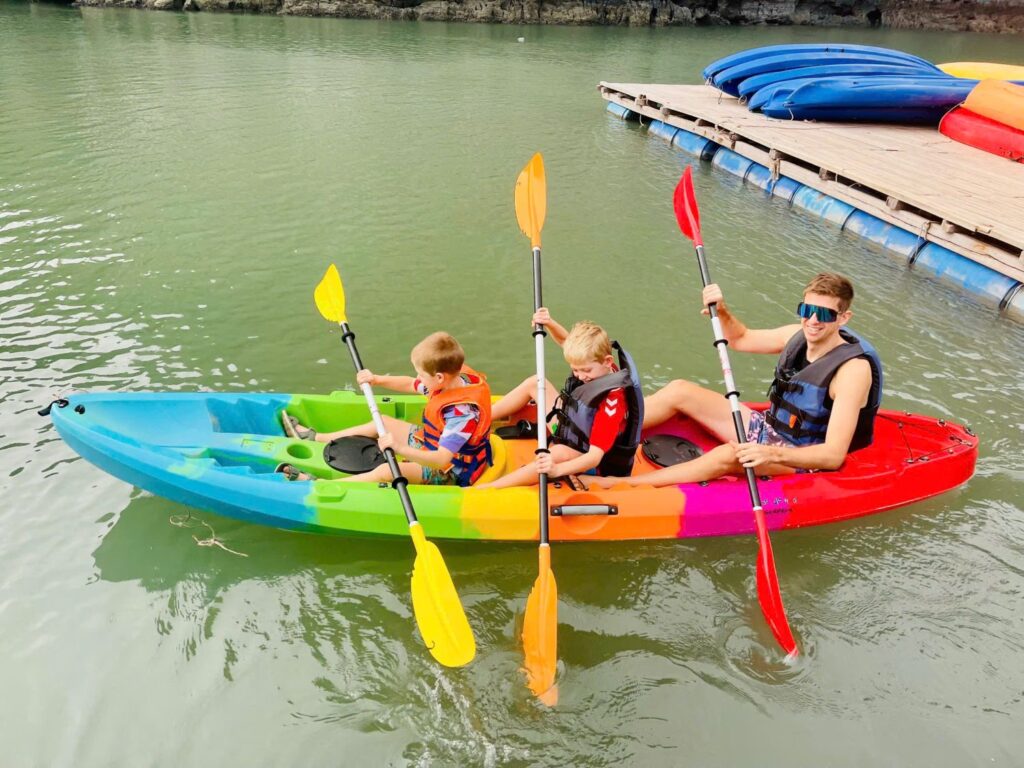
It happens when they lower themselves into a two-person kayak, push away from the main vessel, and slide quietly across the emerald sea.
Suddenly, the hum of ship engines fades into complete silence. You are surrounded by towering, vertical limestone karsts carved over thousands of years by wind and water. As you dip your paddle into the calm sea, you can reach out and touch ancient cliff walls, navigate narrow arches, and discover hidden lagoons accessible only to small watercraft.
Kayaking is not just an activity in Halong Bay — it is the single best way to connect deeply with this UNESCO World Heritage Site.
However, because kayaking is a hands-on, outdoor aquatic experience, weather and sea conditions play an enormous role in how much you’ll enjoy it. A calm day makes paddling feel effortless, while heavy rain or strong wind can mean cancelled excursions.
So, when is the absolute best time for kayaking in Halong Bay? Here is your definitive, season-by-season guide to planning the ultimate paddling adventure.
Quick Summary: The Best Months at a Glance
If you are looking for a quick answer to start planning your dream kayaking trip, here is the short version of what you need to know about Halong Bay's best weather windows:
- The Gold Standard (October to November): This is unequivocally the most perfect time of year for kayaking in Halong Bay. The intense summer heat drops into a comfortable rhythm, the rainy season completely disappears, and the bay experiences dry, sunny days with light, refreshing ocean breezes. Most importantly, the water surface is remarkably calm and glassy, making paddling feel completely effortless.
- The Runner-Up (March to April): As winter leaves the region, spring arrives with delightfully mild temperatures, crisp morning air, and lush green vegetation bursting on the karst cliffs. The sea conditions are wonderfully gentle, allowing you to stay on the water for hours without getting too hot or feeling chilled by wind.
That said, Halong Bay is a true year-round destination. There is no single "wrong" time to visit — each season simply paints the bay in a different light. Summer offers vibrant blue skies and deep warm waters perfect for taking a quick swim straight off your kayak, while winter wraps the limestone giants in a moody, mystical fog that turns every paddle stroke into a scene out of a traditional painting.
Whatever time of year you choose to travel, Halong Bay always has a unique mood, an incredible backdrop for photography, and an unforgettable paddling experience waiting for you.
Detailed Breakdown: Halong Bay Kayaking Season by Season
1. Autumn (October – November): The Absolute Best Time
If you ask any local guide or seasoned captain when they prefer to take guests kayaking, they will almost always answer with autumn.
By October, the oppressive summer heat and heavy monsoon rains have swept away, leaving behind clear blue skies, mild sunshine, and remarkably dry air.
- Average Temperatures: 20°C - 26°C (68°F - 79°F)
- Sea Conditions: Exceptionally calm, glassy water surface with high underwater visibility.
- Why Kayaking is Magical Now: You can paddle for two hours without getting exhausted by heat or soaked by rain. The lighting during early mornings and late afternoons is a photographer's dream — crisp, warm, and clear.
- Pro Tip: Because this is peak travel season for international visitors, book your cruise well in advance to secure the best routes.
2. Spring (March – April): Refreshing, Vibrant & Scenic
Spring is another golden window for outdoor enthusiasts in Northern Vietnam. As winter fades, temperatures rise into a very comfortable range, and the jungle foliage covering the limestone islands blooms in rich shades of green.
- Average Temperatures: 20°C - 27°C (68°F - 80°F)
- Sea Conditions: Gentle, mild waters with pleasant surface temperatures.
- Why Kayaking is Magical Now: The bay feels alive and fresh. You’ll enjoy warm sunshine without the high humidity of mid-summer.
- Watch Out For: Early morning fog (known locally as nồm). While sea mist can briefly delay kayaking by an hour or two for safety reasons, watching the fog lift off the karst peaks while drifting in your kayak is pure magic.
3. Summer (May – August): For Sun-Chasers & Water Lovers
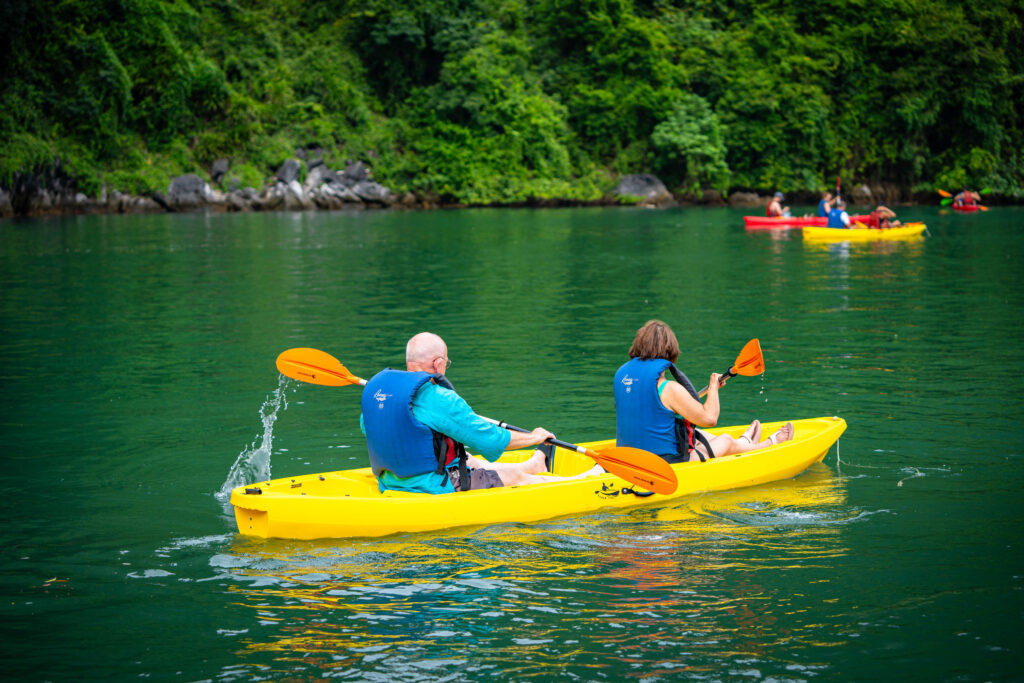
Summer in Halong Bay brings long daylight hours, vibrant blue water, and dramatic skies. If your idea of kayaking involves paddling up to a secluded white-sand beach and immediately diving into the sea to cool off, summer is made for you.
- Average Temperatures: 30°C - 35°C (86°F - 95°F)
- Sea Conditions: Warm sea water, though afternoon heat waves can be intense.
- Why Kayaking is Magical Now: Water temperatures are perfect for swimming, snorkeling, and jumping directly off your kayak into the ocean.
- Important Considerations:
- Heat & UV: Paddling under the midday sun can be exhausting. Most cruises adjust their schedules to kayak early in the morning or late in the afternoon.
- Storms: July and August bring occasional tropical storms or typhoons. If a storm hits, port authorities may temporarily halt water activities or require ships to return to harbor. Always check cancellation policies when booking summer cruises.
4. Winter (December – February): Atmospheric, Quiet & Mystical
Winter brings cool, crisp weather and persistent low clouds or light mist to Northern Vietnam. Swimming might be out of the question for most, but kayaking remains one of the most popular activities on board.
- Average Temperatures: 13°C - 20°C (55°F - 68°F)
- Sea Conditions: Generally calm, though chilly air breezes are frequent.
- Why Kayaking is Magical Now: The mist transforms Halong Bay into a scene straight out of a traditional East Asian ink painting. The towering rocks emerge mysteriously out of the fog, creating a tranquil, moody atmosphere. Plus, paddling is a great exercise to warm your body up!
- Pro Tip: Pack a lightweight waterproof windbreaker and fleece layers. Wear quick-dry pants instead of shorts so you stay comfortable out on the water.
Where to Go: Top Kayaking Locations in the Bay
Halong Bay covers over 1,500 square kilometers, incorporating neighboring Lan Ha Bay to the south and Bai Tu Long Bay to the east. Where your cruise takes you will determine your kayaking landscape:
1. Luon Cave (Hang Luon - Halong Bay Center)
- Highlights: A natural archway cut through a limestone mountain that opens into a hidden, enclosed saltwater lake surrounded by sheer cliffs.
- What to expect: Flat water and wild golden monkeys hanging from the trees along the cliffs.

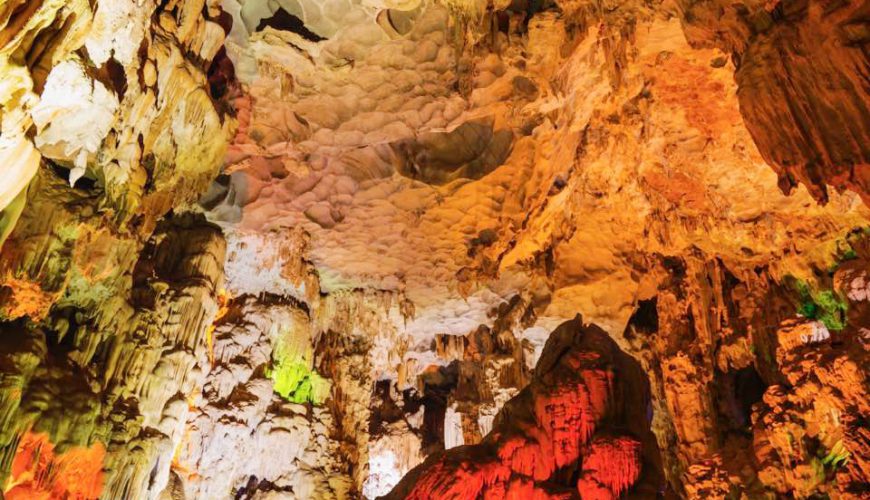
2. Dark & Bright Cave (Hang Sang Toi - Lan Ha Bay)
- Highlights: A long, natural tunnel system carved through karst stone.
- What to expect: You’ll paddle through pitch-black stretches inside the cave before emerging into a secluded, peaceful lagoon ringed by orchids and towering greenery.
3. Trinh Nu Cave & Beach (Virgin Cave)
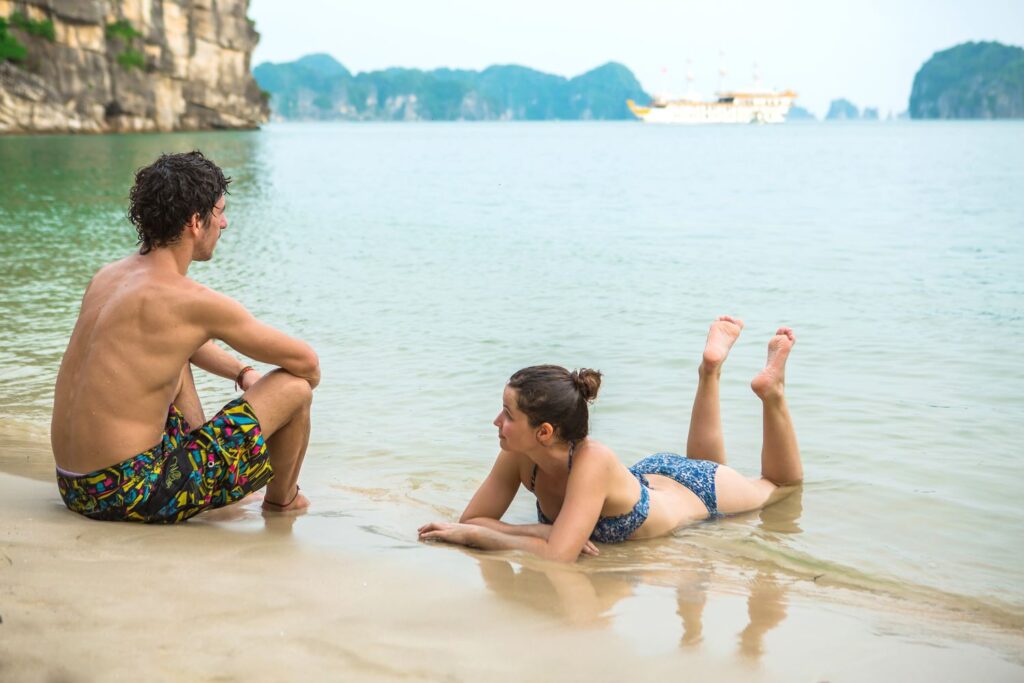
- Highlights: Located in a quieter sector of Halong Bay, offering a combination of quiet cave exploration and a small private sandy beach.
- What to expect: Perfect for beginners due to the sheltered, wind-protected waters.
4. Cong Do Area & Cap La (Bai Tu Long Bay)
- Highlights: Far away from the main tourist highway, this area features pristine sea lagoons, coral reefs, and thousands of untouched islets.
- What to expect: Ultimate peace and privacy, ideal for travelers wanting to escape the crowds.
Essential Kayaking Safety & Preparation Tips
To make the most of your time on the water, keep these practical tips in mind:
- Always Wear Your Life Jacket: No matter how calm the sea looks or how experienced a swimmer you are, wearing a fitting life vest is strictly required by maritime safety regulations.
- Bring a Reliable Dry Bag: Water will inevitably splash off your paddle and drip into the kayak cockpit. Protect your phone, camera, and passport inside a sealed waterproof dry bag ($5\text{L} - 10\text{L}$ capacity is ideal).
- Mind the Tides: Tides dictate when certain low-hanging sea caves can be passed through safely. During extremely high tides, some tunnel openings become impassable. Trust your cruise guide's timing!
- Sun Protection is Mandatory Year-Round: Sun rays reflect intensely off the sea water. Always apply reef-safe sunscreen, wear a wide-brimmed hat (or a traditional Vietnamese nón lá), and bring polarized sunglasses.
- Protect Your Belongings: Keep loose items secured. If a camera or smartphone falls into the deep emerald waters of the bay, it is usually lost for good!
Final Thoughts: Ready to Paddle?
There is no wrong time to visit Halong Bay, but if your main dream is to spend hours gliding past limestone giants in total comfort, plan your trip for October through November or March through April. During these golden months, the weather, water, and skies align perfectly for an unforgettable paddling adventure.
Grab your paddle, slip into your life jacket, and prepare to discover a side of Halong Bay that travelers on large ships never get to see!